
No items found.



Why we invested in Kraken
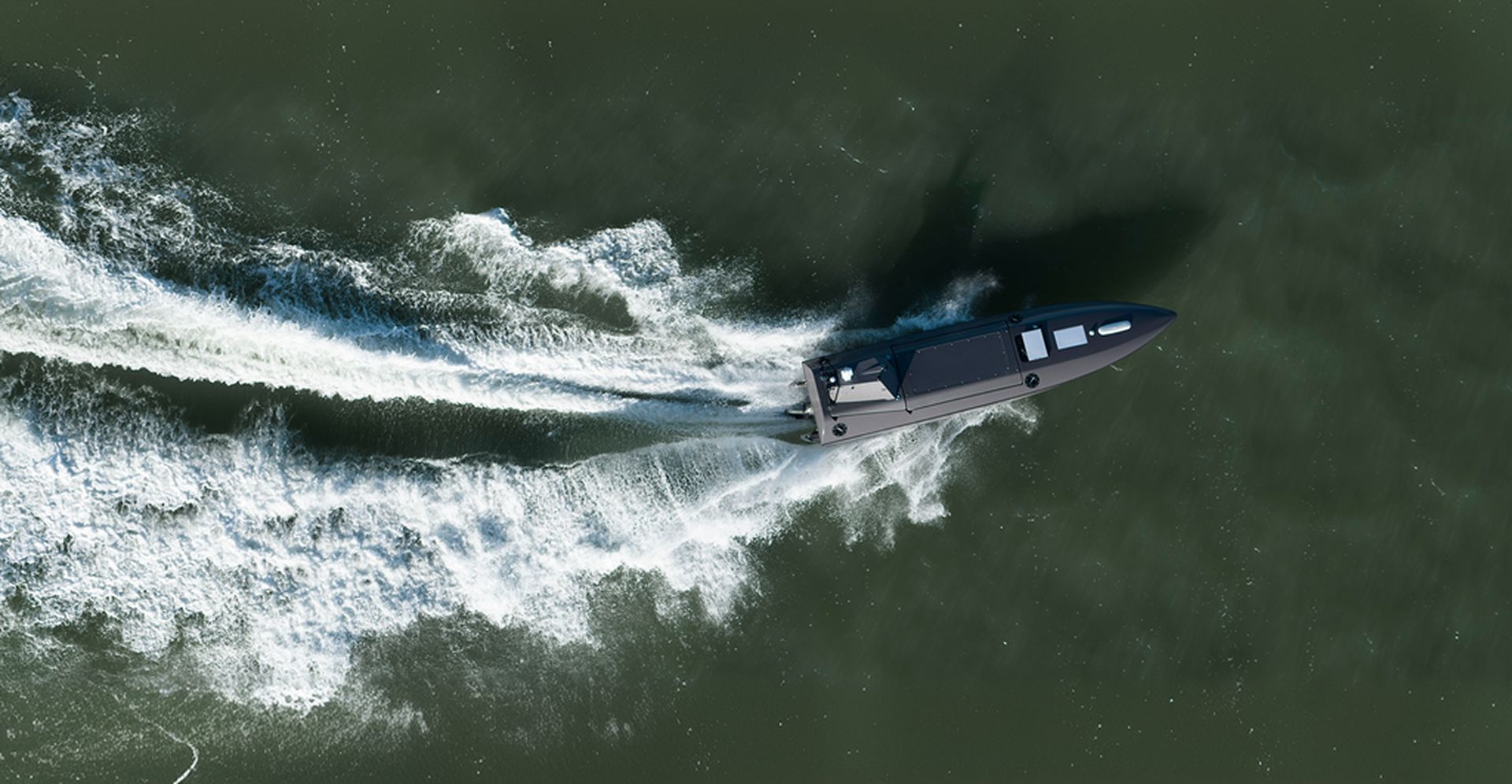

Autonomous technology has conquered the air and the land. Now it is time to do the same on water. Aerial technology has produced drones, autonomous vehicles are commonplace on land, but so far no one has successfully developed unmanned autonomous boats at sea. Until now… Enter Kraken Technology Group.
Kraken has already proved its mettle in producing high-speed, high-performance boats, and has emerged as the de-facto leader in unmanned maritime systems in Europe and beyond. It has also reached milestones that are remarkable for an early-stage company. At Notion Capital, we're excited to be an early investor, having led Kraken's Series A last August (unannounced at the time), and to support its journey to becoming the world leader in full-scale military autonomy on water, as well as commercial applications for the maritime industry.
Kraken solves for the rapidly-changing maritime domain
Amid geopolitical uncertainty, the threat landscape is changing and naval forces face unpredictable adversaries and operational demands that are often in flux. At the same time, more critical infrastructure is at sea (such as data cables and oil and gas pipelines). This has pushed maritime security up the agenda, along with a recognition that speed and agility are now more of a strategic advantage than ever before.
Traditional maritime models are also under pressure, and the process of building new warships is too slow, and too expensive, to respond to the evolving present-day threats. These developments come at a time when there is a wider shift towards autonomy, and navies are becoming hybrid forces with fleets of both manned and unmanned vessels.
This is creating demand for cost-effective uncrewed surface vessels. Once thought of as a niche for detecting mines, these unmanned boats are now finding numerous use cases to meet the changing nature of maritime security, as well as commercial applications such as protecting oil rigs and wind farms.
The maritime domain is arguably the hardest environment for cost-effective, autonomous systems to master. Unlike air or land, the ocean is a constantly moving, corrosive, and communication-hostile environment. Saltwater degrades materials, and GPS [global positioning system] and radio links can break down in high sea states or underwater, and wave action creates chaotic dynamics that are difficult to model or control. Building unmanned vessels or sub-surface platforms that can operate reliably in high sea states, avoid detection, navigate long distances, and make decisions without constant human oversight is vastly more complex than launching an aerial drone or ground robot.
The business case, however, for autonomous robotics systems has now become compelling at scale and recent improvements in the foundational technology have lowered the cost to create an inflection point in adoption.
Kraken leverages its origins as a speedboat-racing company
Kraken was born out of a world-class speedboat racing team that knows what it takes to win and has the disciplined execution to make it happen. The company also stands out because of its high performance, precision, rapid iteration and real-world testing of its designs.
Kraken’s products are state-of-the-art and include the K3 Scout, an autonomous speedboat that is designed for rapid deployment and comes at a relatively-cheap price point (for military procurement). Another of its vessels is the K4 Manta, an unmanned hydrofoil vessel that can sit above the water, or below it in stealth mode.
It’s not just the vessels themselves that are of interest, but the platform on which they operate. The vessels are all operated from the same mission planning and control software, ensuring seamless operations across diverse missions with interoperability between different systems. Kraken has built an increasingly intelligent software and autonomy stack that is built on the principles of open architecture and is designed to withstand scrutiny.
Kraken goes beyond the conventional product-market fit
There were a number of stand-out factors that influenced our decision to invest in Kraken. These proof points include:
- Navigating government purchasing processes: Governments typically have slow procurement processes and many startups, especially in the defense domain, fail to navigate them at the required pace to be commercially viable. Kraken has shown unparalleled expertise in this domain, by building the expertise and network to emerge as the de facto standard for cost-effective, intelligent, unmanned maritime use cases and unlocking demand at scale beyond the current geopolitical conflicts.
- Manufacturing at scale: A hurdle that many start-ups face is in fulfilling the order book and delivering at a pace that meets their clients demands. Scaling supplier relationships, manufacturing processes, assembly, and logistics comes with a plethora of challenges that Kraken has mastered. Kraken has also been able to operate at pace in meeting orders in part because of its product design and production process. The Scout, for example, can be shipped in a box and assembled locally on arrival. This production, similar to the CKD [completely knocked down] process in the automotive industry, is proving popular – and successful.
- Forging key partnerships: Kraken has recently entered into a partnership with the iconic German shipbuilder Lürssen. Kraken contributes its expertise in high-performance unmanned vessels and modular mission systems, while Lürssen provides shipbuilding capacity, naval certification, and integration capabilities. This arrangement enables Kraken to produce at scale and also strengthens its supply chain, a consideration that is critical in the defence domain. Kraken has also partnered with Applied Intuition, a vehicle intelligence company that specialises in safe, AI-driven machines, to further develop the full autonomy capabilities of its vessels.
- Selling to militaries at scale: Several credible Western militaries are buying Kraken vessels at scale and actually using them in real operations. Having their vessels in action gives the company access to live data on the vessels’ performance and creates a feedback loop that will inform their future development.
Kraken is led by a credible team with unique capabilities
Kraken is led by a team that combines speedboat expertise, military experience and competence in defence technology, and its people understand well the defence and commercial use cases for its products. Malcolm Crease, the CEO and Founder of Kraken, is a highly-driven founder with 20+ years experience in offshore speed boat racing with multiple world records. He founded several tech companies and even had a stint in the competitive world of Formula 1. He is joined by experienced executives from offshore racing as well as the defence industry (such as L3Harris), in addition to various high-ranking military officials as advisors.
Kraken is well set for the next stage of development
We are excited to support Kraken as it further scales up its manufacturing capability and product expansion. With its autonomous software, the company has laid the foundation for cross-selling to existing buyers, who can add more vessels onto the interoperable platform that Kraken has built.
The elements that have been outlined above make for a very compelling investment. We believe Kraken has the potential to disrupt the maritime industry, and with their innovative products, visionary leadership, and immense global market potential, we think they are poised to become one of Europe’s iconic companies. We’re excited to support the team on their journey as they expand their global footprint and develop their family of systems further.
Similiar
Articles
you also may like to read
Similar
Articles
you also may like to read




Get the latest from Notion Capital. Sign up to our newsletter.
Keep the conversation going:
LinkedIn
