


Pacing the Marathon: Elite Sport Lessons for Founders
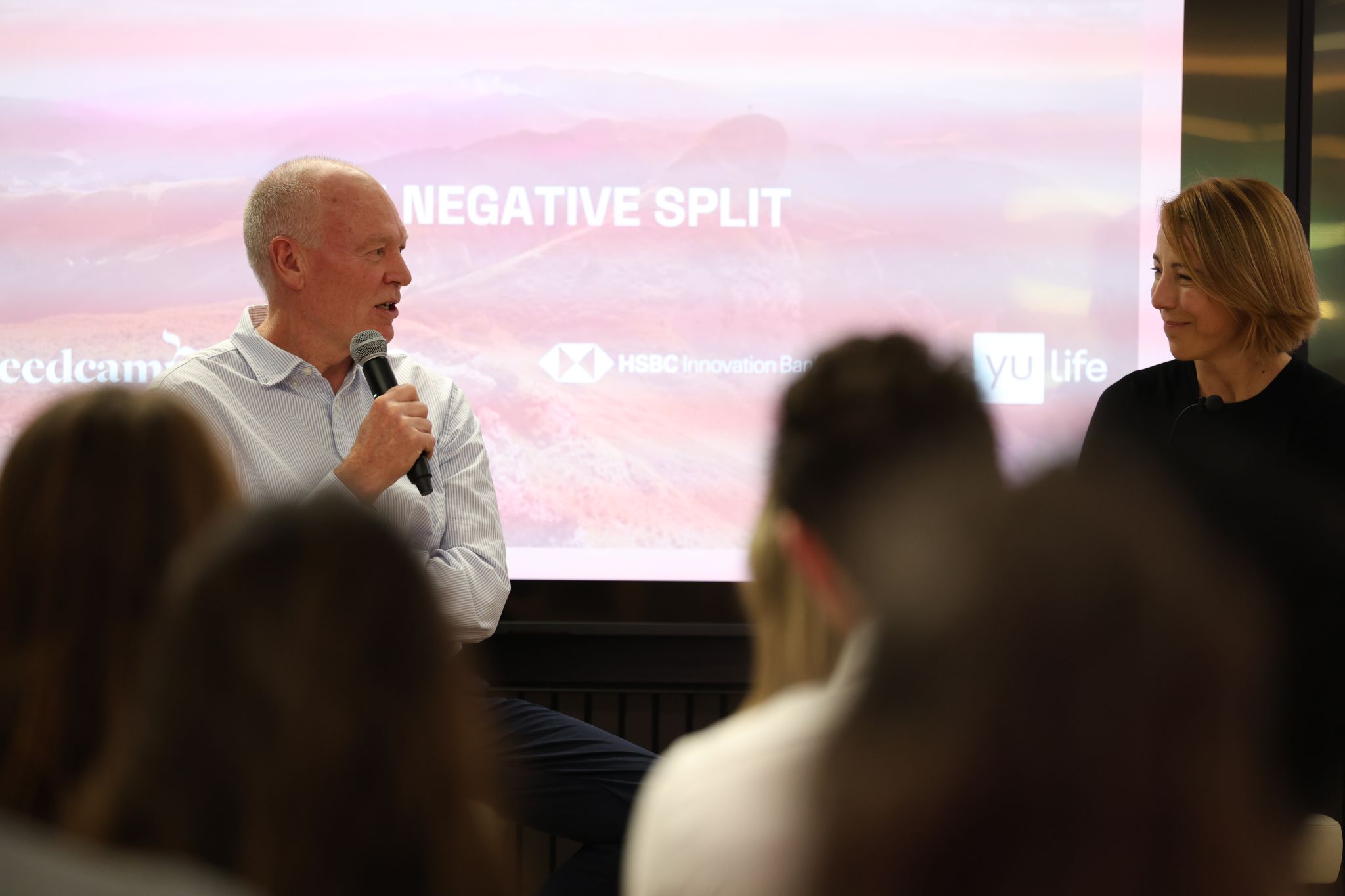

A few days ago, I had the pleasure to sit down with Wayne Diesel and discuss all things performance. Wayne is one of the leading sport performance coaches in the world. Across the NBA, NFL, international rugby and Premier League football, he has worked with some of the world’s most demanding performers.
Wayne Diesel has spent more than three decades at the sharp edge of elite sport. A sports physiotherapist and performance expert with a PhD in Exercise Physiology, his career has stretched across South Africa, the UK, and the United States. He has led performance and medical teams for organisations including the Miami Dolphins, the San Antonio Spurs, Tottenham Hotspur and Charlton Athletic.
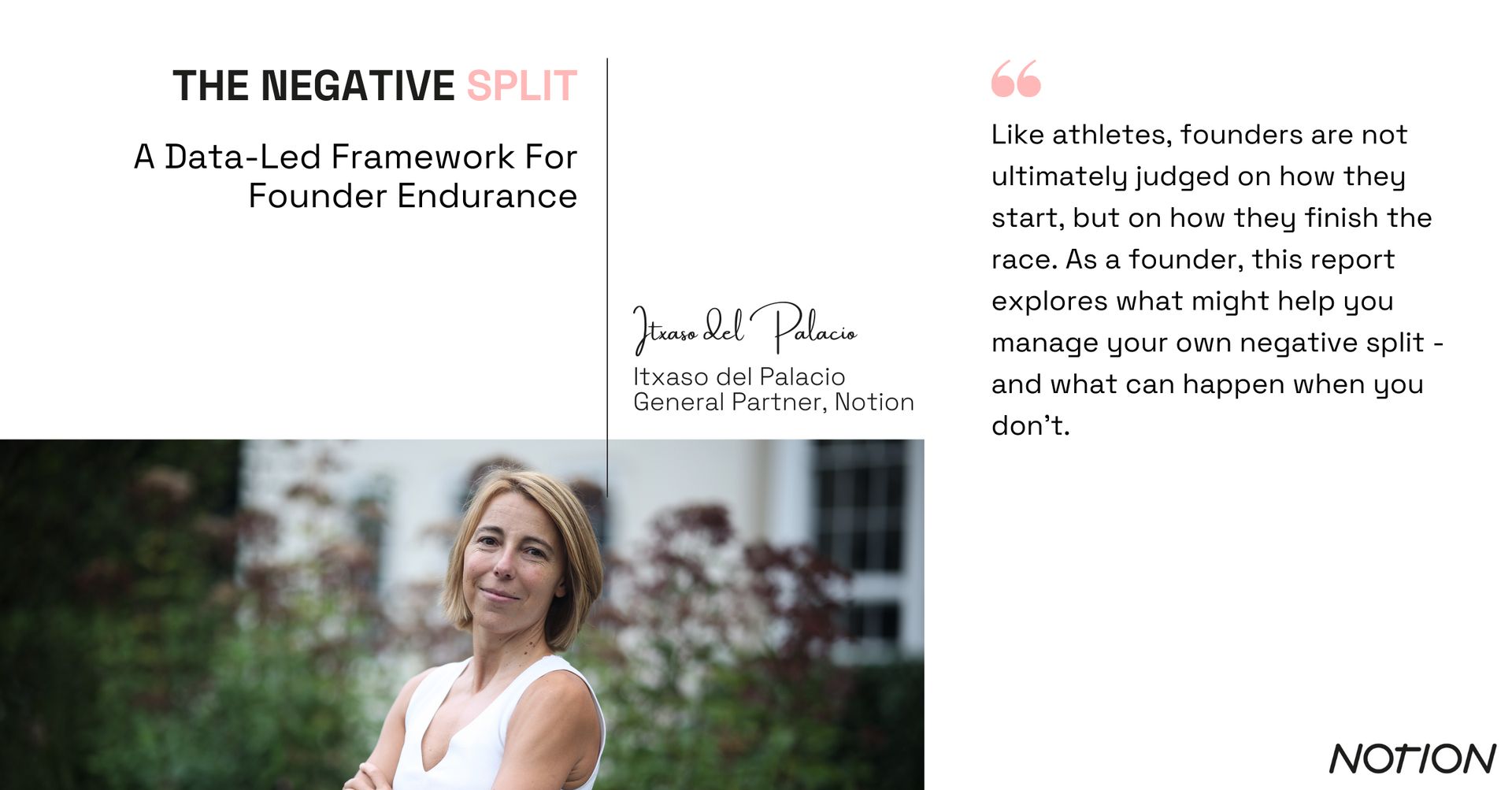
In endurance sport, the “negative split” is a deliberate strategy to conserve, calibrate and then accelerate, finishing stronger than you began. My report The Negative Split published by in December 2025, applies that principle to founders, arguing that long-term performance depends not on constant intensity, but on intelligent pacing. Wayne contributed to the report’s research. In this interview, he expands on his findings, exploring what founders can learn from professional athletes about workload, recovery, resilience and finishing the race strong.
In Conversation with Wayne Diesel: The Negative Split Between Sport and Startups
What do we understand by performance?
Performance in elite sport is built on four interconnected pillars: physical, psychological, technical and tactical. These elements do not operate independently; they reinforce and amplify one another. Physical strength without tactical intelligence is incomplete. Technical skill without psychological resilience will falter under pressure. True high performance lies in integration.
At the elite level, performance is carefully engineered. Strength, endurance, skill development and mental conditioning are synchronised within a broader strategy. Data analytics provide real-time insights into workload, recovery patterns and injury risk, allowing performance teams to intervene before breakdown occurs. Crucially, programmes are never generic. Every athlete has distinct physiological responses, psychological traits and positional demands. Nutrition, training loads and recovery strategies are tailored individually. Performance is not mass-produced; it is personalised and precise.
What is the connection between the brain and physical performance?
The brain is the governing system behind every physical output. It activates muscles, coordinates movement, regulates pacing and ultimately determines endurance capacity. Even fatigue is not simply muscular, it is centrally mediated by the brain.
Equally important is the reciprocal relationship: regular physical activity enhances brain function. Exercise stimulates improved mood, sharper cognition and better emotional regulation. Remarkably, even a single session of exercise can improve focus and mood for up to two hours. Physical training is therefore not only about improving the body; it is one of the most reliable ways to optimise cognitive performance.
In sport, nobody trains at 100% intensity 365 days a year. But in startups, we almost glorify that? How do you convince high-achievers that recovery isn’t weakness?
The first step is reframing recovery as a cornerstone of high performance rather than a concession to fragility. Elite athletes do not see recovery as optional; they see it as a competitive advantage.
Grinding through pain without strategic rest often leads to declining output. Without recovery, muscle tissue does not repair and strengthen. Cognitive clarity deteriorates. Overtraining syndrome can develop, increasing injury risk and reducing performance consistency.
Sleep and particularly deep sleep, plays a fundamental role in tissue repair through growth hormone release. Nutrition and hydration replenish depleted energy stores and support cellular recovery. When recovery is neglected, both physical and mental systems begin to degrade. High performance depends not on constant strain, but on intelligent alternation between stress and restoration.
In sport, nutrition is a performance strategy. In startups, it’s often caffeine and whatever’s nearby. We often hear sentences like: "I don't have time to eat." What are the biggest nutrition mistakes high performers make under pressure?
Under pressure, high performers often under-fuel. They skip meals, mistime intake, rely excessively on supplements, neglect hydration, or abandon consistent routines. Breakfast is commonly sacrificed, and caffeine becomes a substitute for structured nutrition.
These habits compromise performance in subtle but significant ways. In sport, fuelling is synchronised with training and competition demands. The body and brain require stable energy availability to perform optimally. When nutrition becomes reactive rather than strategic, output inevitably suffers.
What happens neurologically when founders skip meals or under-fuel?
The neurological consequences range from immediate cognitive impairment to longer-term structural changes. In the short term, under-fuelling impairs decision-making, concentration and problem-solving capacity. Neurochemically, anxiety can increase while serotonin and dopamine production, which are critical for sleep and motivation, declines.
Over time, chronic under-nutrition can contribute to structural brain changes, including atrophy. Behaviourally, individuals may become more rigid in their thinking, less socially engaged and more prone to apathy. Sensitivity to light or noise may increase, and insomnia can develop.
A consistently under-fuelled brain cannot sustain strategic clarity. Performance begins to narrow rather than expand.
In startups, we obsess over product metrics — but rarely track founder metrics. What 3–5 health metrics should founders track weekly?
Founders should monitor a blend of recovery, activity and body composition metrics, focusing on weekly averages rather than daily fluctuations. Activity levels — such as maintaining an average of 8,000 to 10,000 steps per day, provide a baseline indicator of movement.
Sleep duration and quality are critical markers of recovery. Heart Rate Variability (HRV) offers insight into nervous system balance and resilience to stress. Resting Heart Rate (RHR) serves as an indicator of cardiovascular fitness and can reveal early signs of overload when elevated. Finally, simple measures such as waist circumference provide useful signals regarding body composition trends. In both athletes and the general population a weekly increase of 5-10 beats per minute may be associated with overtraining or inadequate recovery. Regarding HRV, if your 7-day rolling average declines by 5-10% this often indicates a need for recovery. Overtraining, however, can be likely if there has been a consistent drop in HRV over 3-4 weeks.
These metrics act as early-warning systems. Just as in elite sport, small physiological shifts often precede visible performance decline.
Is there any way a founder can distinguish fatigue from burnout?
Fatigue is typically temporary and resolves with adequate rest. It follows periods of high exertion and improves after sleep or a short recovery break.
Burnout, by contrast, is chronic and systemic. It manifests as persistent exhaustion, lack of motivation, negativity and emotional depletion. Individuals may wake already tired, feeling ineffective or unappreciated. Burnout is not the result of a demanding week; it develops from unmanaged stress over extended periods. The distinction is critical, because fatigue requires rest and burnout requires structural change.
No Olympic champion trains alone. What does a high-performance support system look like in sport and what’s the founder equivalent?
Elite sport operates through interdisciplinary support networks. Physiotherapists, strength coaches, nutritionists, psychologists and analysts collaborate within a 360-degree, data-driven framework. Roles are clearly defined, feedback is continuous, and accountability is embedded. It is not merely about having resources; it is about integrating them effectively.
For founders, the equivalent is a deliberate support ecosystem: mentors, advisors, peer forums and wellness resources that contribute both strategic and psychological reinforcement. The objective is not dependency, but optimisation for maintaining mental health, improving decision quality and sustaining business growth through collective intelligence.
How do you choose the right coach in sports?
Selecting a coach is a critical decision that influences development, enjoyment and long-term performance. Athletes must first define their goals and required skill sets. Credentials and relevant experience matter, but so does personality fit. A one-size-fits-all philosophy rarely works at elite level.
The most effective coaches provide structure while listening carefully. They educate and empower rather than dictate. Clear communication, constructive criticism and accountability form the foundation of effective coaching relationships.
Is there anything we can learn from that for the founder world?
For founders, the principles are similar. The right coach should offer structured pathways to clearly defined goals, combining tactical guidance with transformational mindset development. Experience must be relevant, and personal compatibility is essential; some founders respond well to direct challenge, others to supportive encouragement.
Ultimately, the most effective coach demonstrates empathy, communicates clearly, provides honest feedback and holds the founder accountable for sustainable execution.
A striker can’t win without defenders. At what point does an athlete realise that individual brilliance isn’t enough?
Athletes eventually recognise that talent may win individual games, but collective intelligence wins championships. Individual ability has limits; sustained success depends on synergy, shared strategy and trust.
Teamwork amplifies innovation and resilience. Long-term achievement requires aligning personal ambition with collective objectives. The shift from individual brilliance to collaborative excellence is often what separates short-term success from enduring legacy.
In the NFL, scouts value players who’ve come back from injury. So injury isn’t always a disqualifier; sometimes it’s a predictor of greatness.
What does adversity build neurologically or psychologically?
Adversity, when met with active coping rather than avoidance, can lead to neurological restructuring and psychological growth. The brain forms new neural connections through neuroplasticity and strengthens existing pathways. Our brain has white and grey matter. Grey matter processes information and controls voluntary movement, memory, emotions, and sensory perception. Increases in grey matter are associated with improved memory, processing speed and decision-making. Protective neurochemicals help buffer future stress.
Psychologically, adversity can catalyse post-traumatic growth resulting on deeper appreciation of purpose, stronger relationships, increased empathy and greater confidence in navigating future challenges. The key lies in shifting from shock and withdrawal toward deliberate action and adaptation.
What differentiates athletes who break from those who grow?
The differentiating factor is rarely talent; it is resilience. Those who grow deploy proactive strategies rather than reacting emotionally. They interpret adversity as opportunity rather than threat and avoid fear-of-failure mindsets.
They regulate emotions, use anxiety as performance-enhancing energy, maintain focus, and avoid dwelling on setbacks. Visualisation, structured routines and seeking support from coaches or teammates reinforce stability under pressure. Growth stems from disciplined psychological habits.
In sport, rules change. Coaches change. Teammates change. The only constant is adaptation.
Is adaptability trainable?
While some individuals are naturally resilient, adaptability is largely a learned skill. Through mental training and cognitive restructuring (e.g. through techniques from Cognitive Behaviour Therapy), individuals can identify and modify irrational thought patterns that fuel anxiety and rigidity.
Simulating stressful scenarios during training builds familiarity and reduces shock when real pressure arises. Like strength or endurance, adaptability improves with deliberate practice. It is not fixed; it is cultivated.
Take a look at our recent report The Negative Split and connect with Wayne Diesel and Itxaso del Palacio on LinkedIn.
Similiar
Articles
you also may like to read

Similar
Articles
you also may like to read


Get the latest from Notion Capital. Sign up to our newsletter.
Keep the conversation going:
LinkedIn
